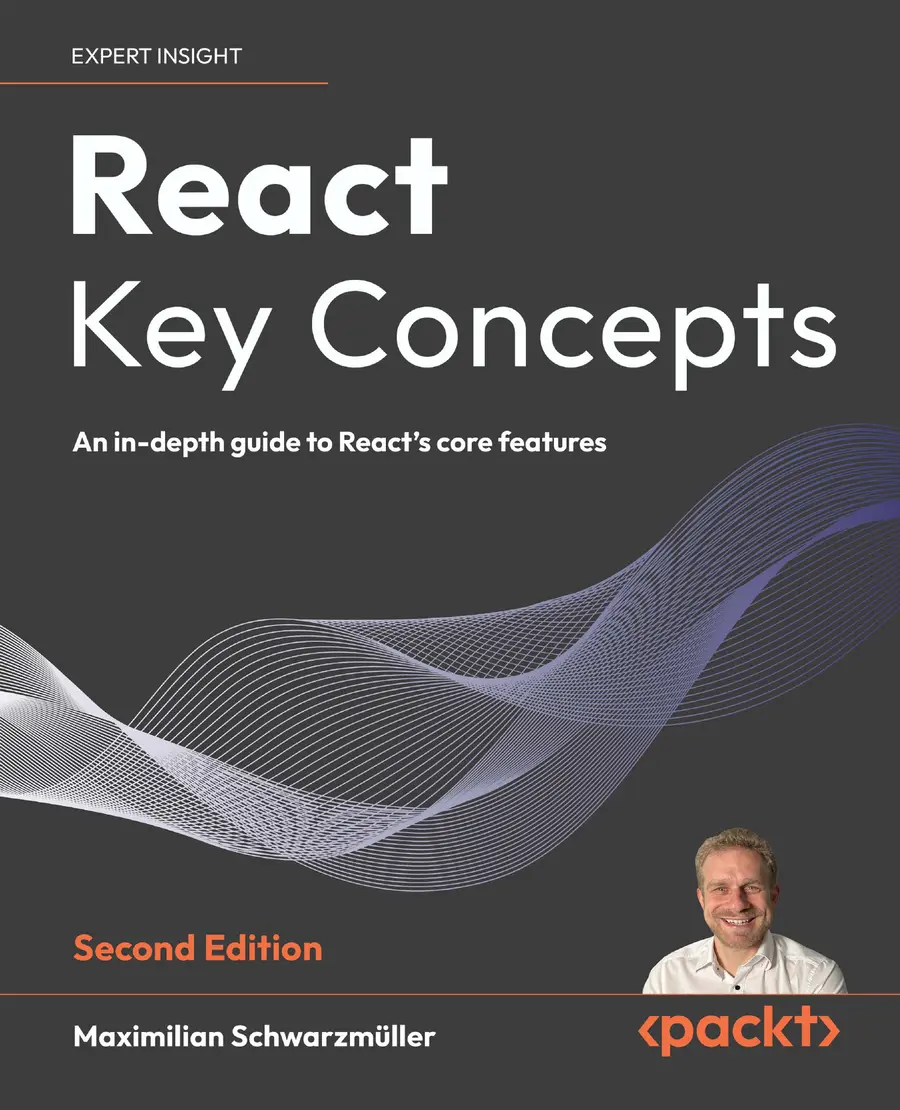
Reading Notes
React Key Concepts is useful as a consolidation book. React is easy to start with, but the real work is learning which parts of the model should stay simple and which parts need deliberate structure.
The value of a book like this is not another introduction to JSX. It is the repeated attention to components, props, state, effects, composition, and the way data moves through an interface.
Useful Ideas
Components Are Boundaries
A good React component is not just a visual fragment. It is a boundary around behavior, data needs, and rendering decisions.
State Needs Ownership
Many React problems come from unclear state ownership. The question is usually not "where can this state live?" but "which part of the interface is responsible for changing it?"
Effects Should Be Suspicious
Effects are useful, but they are also where simple components become harder to reason about. A React codebase improves when effects are treated as integration points rather than a default tool.
Why I Keep It Nearby
This is a practical refresher for frontend work. It helps bring React discussions back to the fundamentals before reaching for more framework, more state management, or more abstraction.
Get the Book
- Author site: React Key Concepts