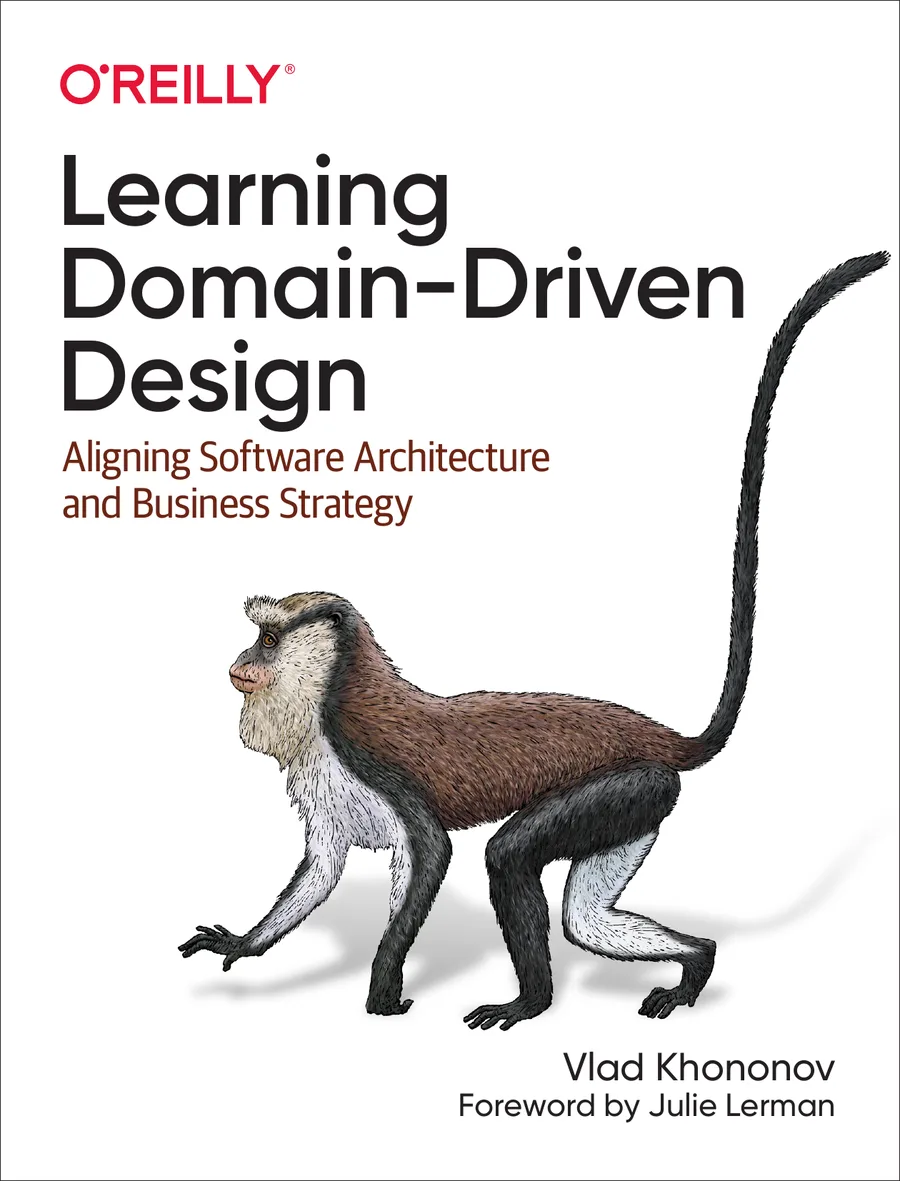
Reading Notes
Learning Domain-Driven Design is a practical bridge between architecture and business understanding.
The book is useful because it does not present DDD as a ceremony or a vocabulary exercise. It treats domain modeling as a way to discover where software complexity comes from and where different models need different boundaries.
For product engineering, the central lesson is direct: a system's architecture should reflect the business problem, not just the engineering team's favorite layers or services.
Useful Ideas
Start With the Domain
Before choosing microservices, event sourcing, CQRS, or any other pattern, the team needs to understand the domain. Which parts are core? Which are supporting? Which are generic enough to buy or outsource?
That distinction prevents overengineering low-value areas and underinvesting in the parts that create product advantage.
Boundaries Are Language Boundaries
Bounded contexts are not only deployment units. They are places where words mean specific things. If two teams use the same word with different meanings, the software probably needs a translation boundary too.
Tactical Patterns Need Context
Transaction scripts, active record, domain models, event-sourced models, CQRS, and sagas are not maturity levels. They are tools. The right pattern depends on the complexity and volatility of the business logic.
Why I Keep It Nearby
This book is helpful when a codebase starts mixing business concepts together and every feature creates accidental coupling. It gives a vocabulary for separating concerns without turning architecture into abstract diagram work.
Get the Book
- O'Reilly: Learning Domain-Driven Design